

🇫🇯🤝🇲🇾 | Launch Of The Malaysia–Fiji Business Council
14/08/2026Published On: 14/08/2026
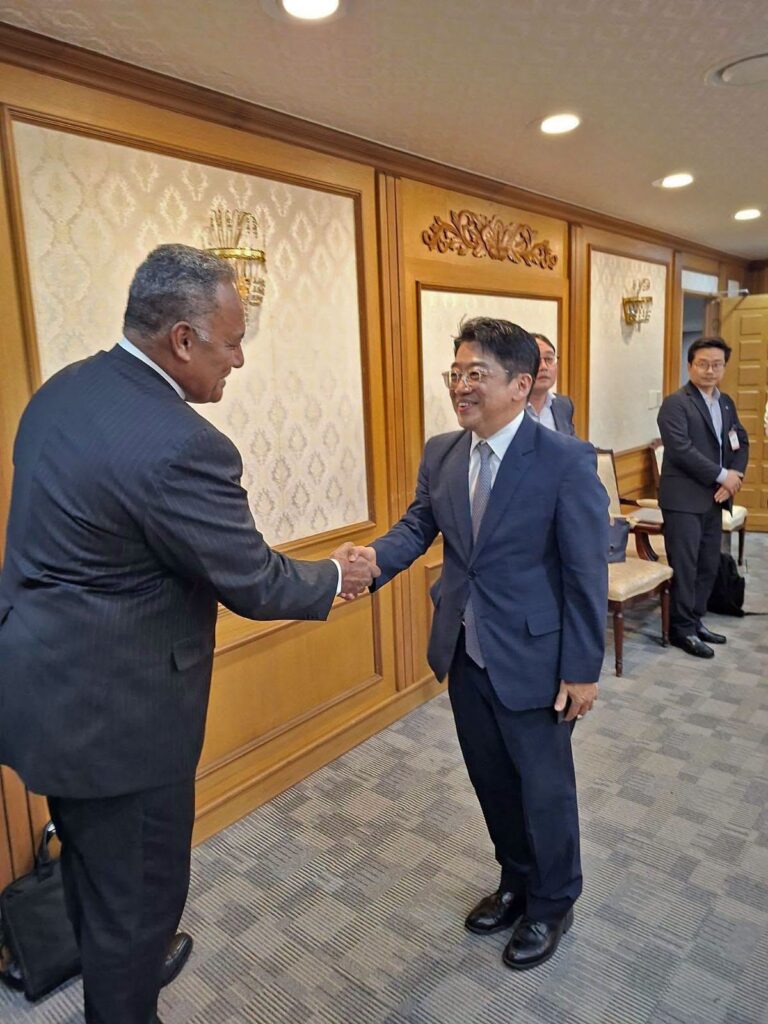
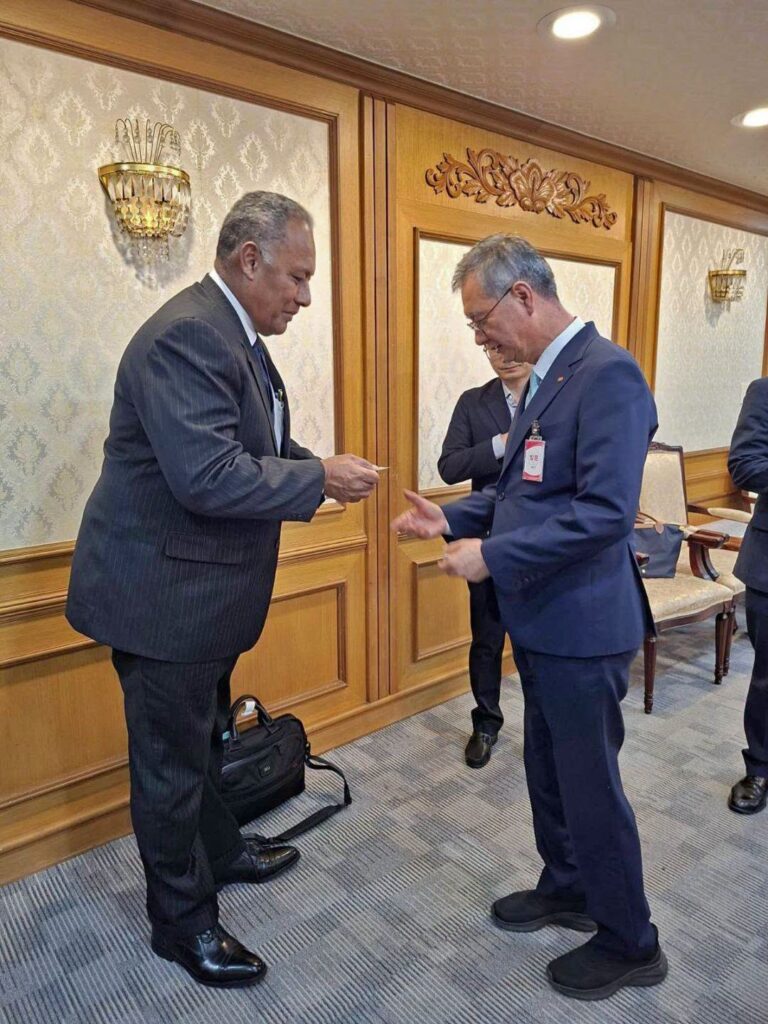
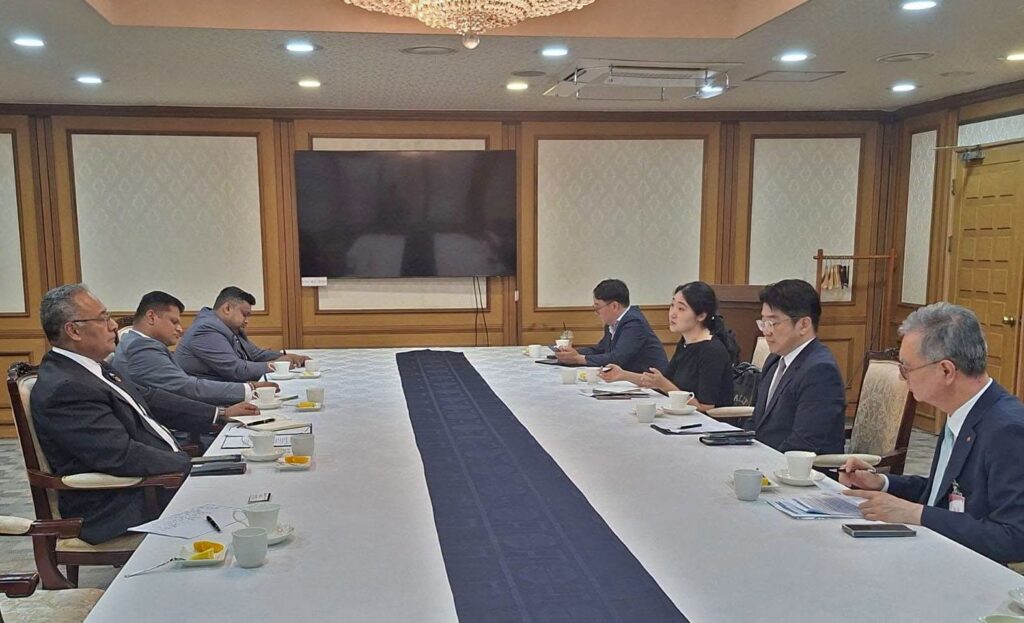
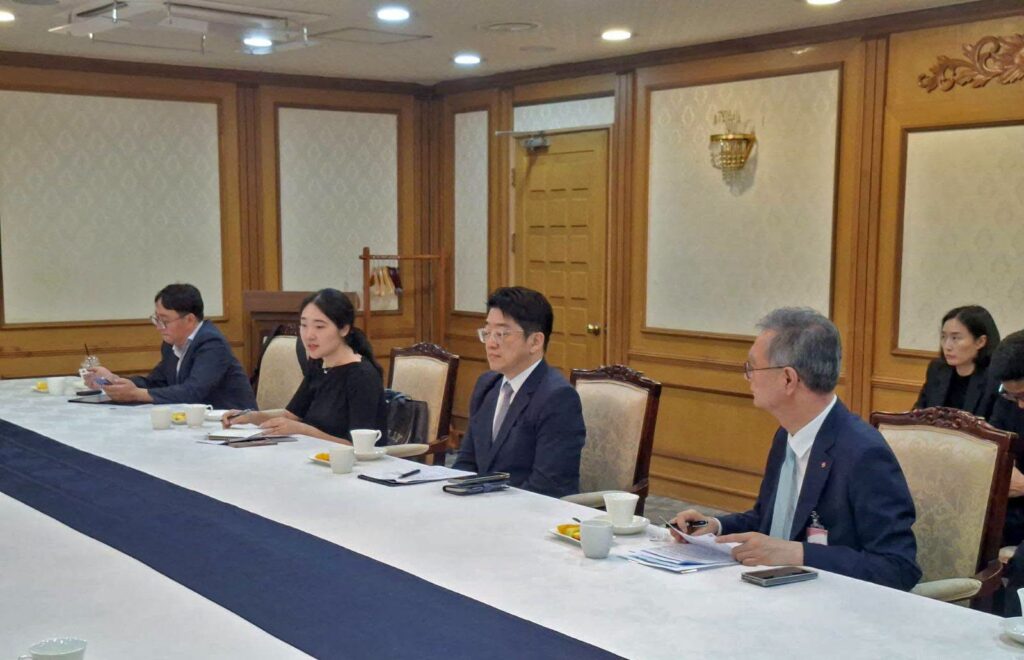
Seoul, Republic of Korea – 13 August 2026 — The Minister for Foreign Affairs and External Trade, Hon. Sakiasi Ditoka, held high-level discussions today with the Republic of Korea’s Deputy Minister for Trade, Industry and Resource Security, Mr Ghi Wuk Yang, and the President and CEO of the Korea National Oil Corporation (KNOC), Mr Joo Suk Son, to strengthen cooperation on Fiji’s long-term fuel security and energy resilience.
The meeting focused on Fiji’s efforts to move beyond short-term responses to global fuel disruptions and develop a more comprehensive and sustainable national fuel security system.
Minister Ditoka highlighted Fiji’s particular vulnerability as a small island developing state heavily dependent on imported petroleum products, while also emphasising Fiji’s wider role as a fuel and logistics hub for the Pacific, with several neighbouring island countries relying significantly on fuel supplies routed through Fiji.
“Fiji is not looking simply for assistance to get through the present crisis. We are looking to ensure that the next crisis does not find us as vulnerable as we were this time,” Minister Ditoka said.
Minister Ditoka also outlined Fiji’s interest in learning from Korea’s extensive experience in strategic petroleum stockpiling, including onshore storage, international and joint stockpiling arrangements, supply-chain resilience and energy infrastructure planning.
A key outcome of the meeting was KNOC’s agreement to collaborate with Fiji and share its technical expertise and experience as Fiji develops its approach to longer-term fuel security. Discussions will now continue at the technical and official levels to identify practical areas of cooperation, including technical assistance and advice on strategic fuel storage and infrastructure planning.
Fiji also expressed interest in exploring innovative approaches to strategic reserves, including the potential for international or offshore stockpiling arrangements that could provide additional security during major disruptions to international supply routes.
The Minister noted that Fiji’s energy security strategy must address both immediate supply risks and the country’s longer-term transition away from imported fossil fuels.
“Korea has built its own energy-security system from experience of external shocks. Fiji would like to learn from that experience and adapt what is appropriate for Fiji and, ultimately, for the wider Pacific,” Minister Ditoka said.
The Government is pursuing partnerships with key Asian and regional partners to strengthen fuel supply assurance, strategic reserves, resilient infrastructure and Fiji’s capacity to withstand future global energy disruptions.