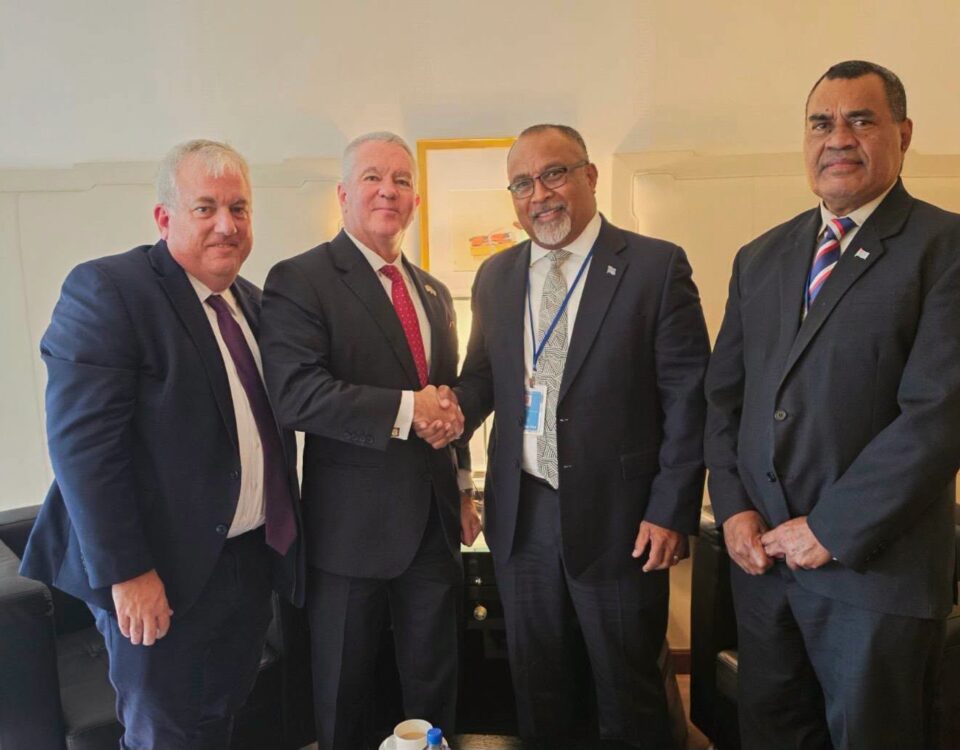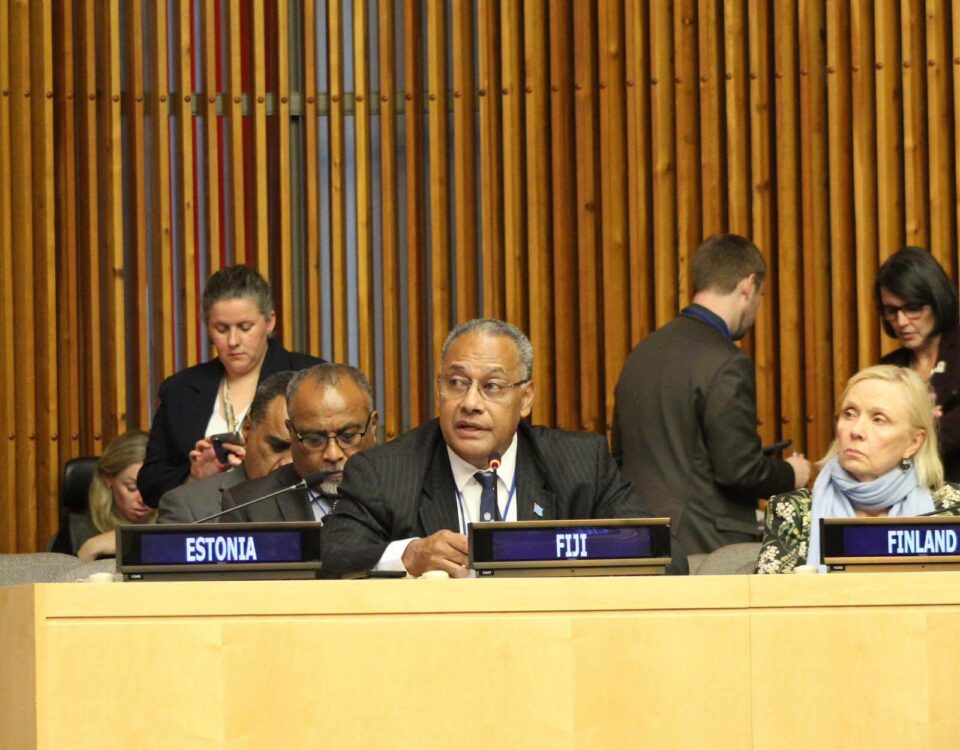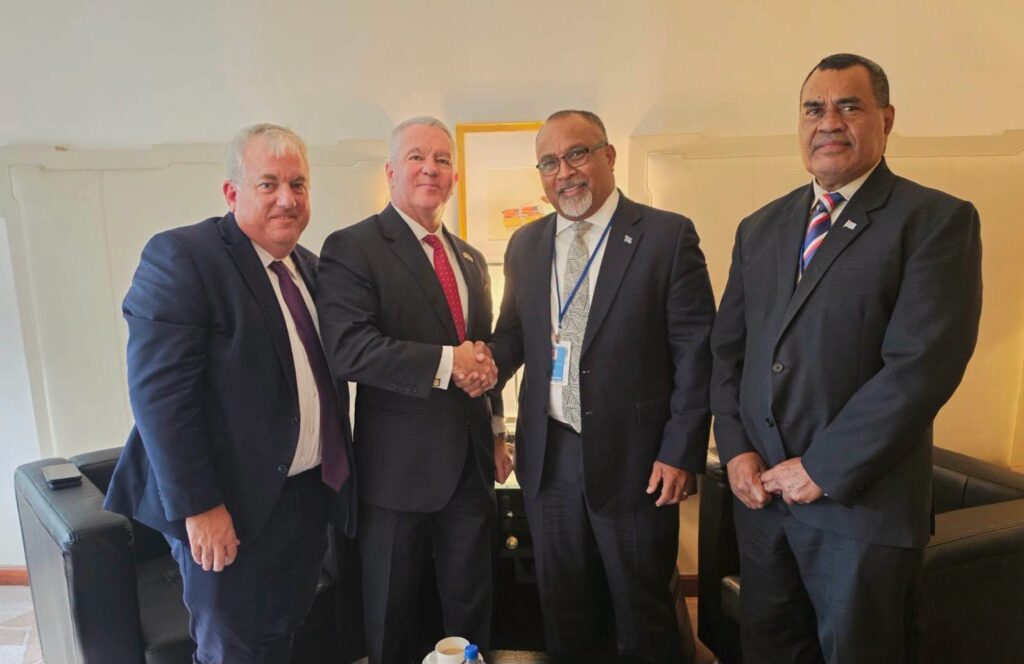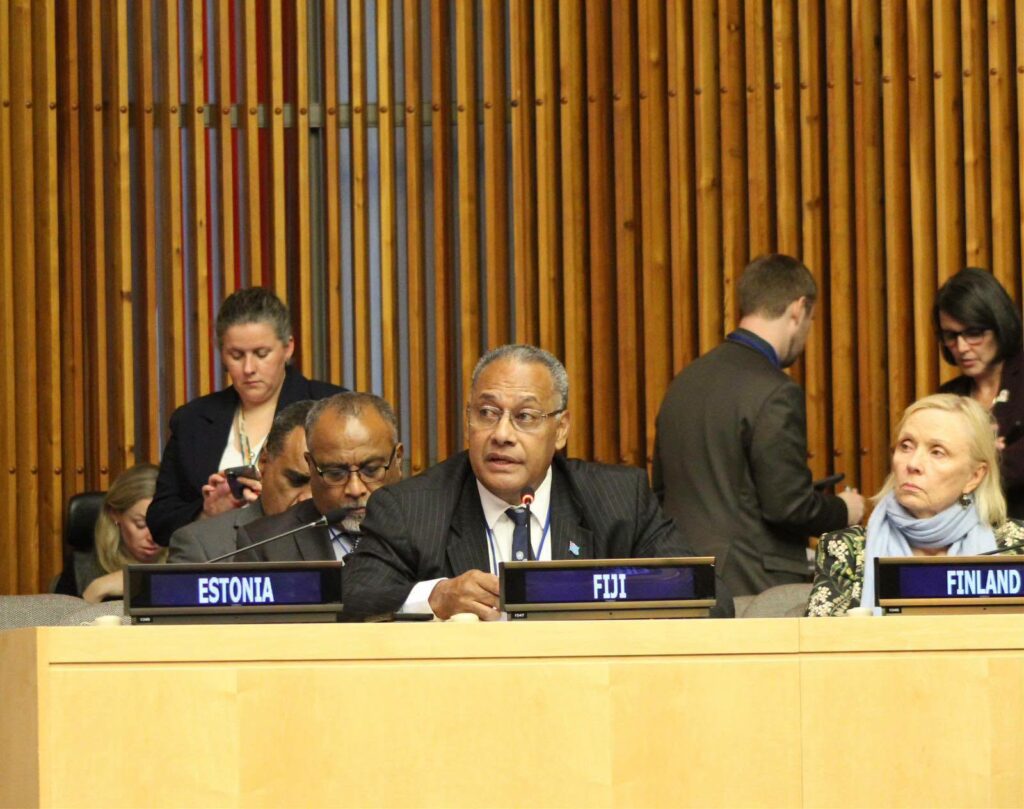



Hon. Ditoka receives Courtesy Call from the United Nations Resident Coordinator
18/03/2026
Fiji and Marshall Islands Advance Bilateral Ties
19/03/2026Published On: 19/03/2026
The Ministry of Foreign Affairs and External Trade continues to closely monitor the evolving security situation in the Middle East, which remains highly volatile and unpredictable.
Recent developments indicate a further escalation of hostilities across multiple fronts, with continued military exchanges contributing to heightened regional tensions. The overall trajectory points to sustained instability, with both security and economic implications for the wider region and beyond.
The Ministry confirms that all Fijian nationals in the region, including members of the Fijian diaspora, Embassy staff, and Fijian peacekeepers deployed in the region, remain safe and accounted for, with no reports of injuries.
Our Embassies in Abu Dhabi and Jerusalem continue to provide full consular support, including assistance for those seeking to depart affected areas.
Fijian nationals are encouraged to consider voluntary evacuation from affected areas as soon as it is safe to do so. Commercial travel may be possible via neighbouring countries, including Jordan and Saudi Arabia, where airspace remains partially operational, however, travellers should confirm flight availability directly with airlines and consider alternative routes, as direct transit options may remain limited.
The Ministry advises that the State of Israel, the United Arab Emirates, and Jordan in the Middle East, and India have offered visa-on-arrival arrangements for Fijian passport holders in light of the current situation to facilitate transit and departure. Nevertheless, Fijians are encouraged to confirm current entry requirements prior to travel and liaise with the nearest Fiji Embassy for guidance on viable travel options.
We continue to strongly advise against all travel to Bahrain, the United Arab Emirates, Kuwait, Qatar, Iraq, Iran, Israel, Syria, Lebanon, and Yemen, and urge Fijians to reconsider non-essential travel to, or transit through, Jordan, Oman, and Saudi Arabia in light of ongoing regional security risks and travel disruptions.
Through the Joint Emergency Operations Centre, the Ministry continues to monitor developments in real time, maintain close communication with Fiji’s Missions and nationals in the region, and actively review and align contingency and evacuation plans to reflect evolving conditions on the ground, including readiness for potential operations in higher-risk locations.